Blog
5+1 Italian Ingredients (and How to Choose Mediterranean Premium Quality)


There is a particular kind of Italian kitchen that does not announce itself. No labels on display, no unnecessary gadgets. Just a handful of exceptional ingredients, each chosen with care, each used with intention. This is not nostalgia. It is a quiet, daily practice that Italian home cooks have maintained for generations, and one of the most well-documented contributors to the Mediterranean diet’s extraordinary health outcomes.
Table of Contents
- The Oil That Starts Everything
- Balsamic: The Patience of Modena
- Pasta as a Meditation on Grain
- Salt That Tastes of the Sea
- The Italian Larder: Preserved Specialties Worth Knowing
- Wine as Part of the Italian Table
- How to Bring This Into Your Life
- A Few Questions Worth Asking
- Sources and References
1. The Oil That Starts Everything
In most Italian households, the olive oil lives on the table, used as a condiment as often as a cooking medium. What justifies that daily devotion is polyphenol content. High-phenolic extra virgin olive oils above 250 mg/kg carry EU-approved health claims for LDL protection. The peppery finish you feel at the back of the throat is oleocanthal, a compound with anti-inflammatory properties comparable to ibuprofen.
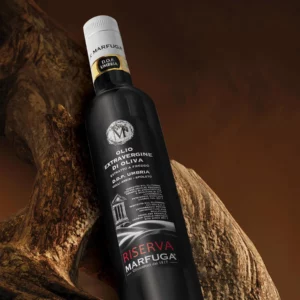
Italian cultivars like Coratina (Puglia) and Nocellara del Belice (Sicily) are among the most polyphenol-rich in the world when harvested early. The producer Marfuga, from Umbria, works exclusively with the Moraiolo cultivar, one of Italy’s oldest and most phenol-dense varieties. Their Novello polyphenol-rich EVOO is an early-harvest expression with a pronounced green character, while the L’Affiorante 100% Moraiolo and the Bio Trace organic EVOO represent their certified organic range.
From Lazio, Quattrociocchi brings comparable rigour to the Itrana and Moraiolo cultivar. Their Olivastro Organic EVOO and the 1Olio Novello are both benchmark early-harvest options with verifiable data. For those starting with Greek high-phenolic oils, the Prevezana Monovarietal Organic High Phenolic EVOO is a reliable entry point. Browse the full olive oil collection for the complete early-harvest selection.
On the label, look for a harvest date, a polyphenol count, and dark glass or tin packaging. These are not marketing signals; they are the minimum information a serious producer provides.
| Producer | Cultivar / Region | Key Characteristic |
|---|---|---|
| Marfuga | Moraiolo, Umbria | Early harvest, certified organic, high phenolic |
| Quattrociocchi | Itrana / Moraiolo, Lazio | Novello early harvest, rigorous quality protocols |
| Prevezana (Greek) | Monovarietal, Epirus | Organic, high-phenolic certified, benchmark entry |
2. Balsamic: The Patience of Modena
Authentic Aceto Balsamico Tradizionale di Modena DOP is made from cooked grape must and aged a minimum of 12 years through a succession of oak, chestnut, cherry, mulberry, and ash barrels. The result is used by the drop, over Parmigiano, strawberries, or a simple risotto. The ingredient list should contain only grape must and wine vinegar, nothing else.
Three tiers to know: IGP for everyday use, DOP red cap (12 years, excellent), DOP gold cap (25 years, exceptional). The house of Giusti, founded in 1605 and the world’s most awarded balsamic producer, represents the gold standard at every tier. For daily use, the Giusti Bordolese 500ml is a PDO-certified benchmark. For gifting, the Giusti 25-Year Extravecchio is among the finest expressions of the tradition.
For collectors and serious enthusiasts, Giusti also produces exceptional limited editions: the Giusti 100 Limited Edition, a 100-year-old reserve in a 100ml standardised bottle, and the Giusti Expos Hommage (3×100ml), created in tribute to the great world exhibitions. For the complete Giusti experience, the 5×100ml Complete Collection Case brings together their full range and makes one of the most considered gifts a person of taste could receive.
Price is always the clearest signal of authenticity. Authentic Tradizionale DOP in its standardised 100ml bottle starts at around €40 for the 12-year minimum. Anything claiming the same age at a fraction of that price warrants scrutiny.
3. Pasta as a Meditation on Grain
The best pasta disappears into the dish. You notice the sauce clings differently, the texture has resistance without heaviness. These qualities come from bronze die extrusion (trafilata al bronzo), which leaves the surface rough and porous, and from slow drying at low temperatures (essiccazione lenta), which preserves the wheat’s protein integrity.
Gragnano near Naples holds IGP status for its pasta tradition, a recognition tied to the town’s unique combination of mountain air, sea breeze, and centuries of craft. Sicilian producers using ancient varieties like Senatore Cappelli offer higher protein and mineral content than modern hybrid wheats, with a depth of flavour that reflects the grain’s heritage.
On the label: look for trafilata al bronzo, a named grain or region of origin, and a golden-ivory colour rather than the bright white that indicates over-processing. These are not aspirational details; they are what separates pasta that elevates a dish from pasta that merely fills it.
4. Salt That Tastes of the Sea
The Trapani salt flats of Sicily, a Slow Food Presidium, produce one of Europe’s most celebrated sea salts, hand-harvested, sun-dried, and mineral-rich with magnesium, potassium, and calcium. Its flavour is rounder and less aggressively saline than refined alternatives, and it is most apparent in the simplest applications: over grilled fish, over tomatoes with a good olive oil, alongside aged cheese.
For those seeking Italian provenance across their pantry, the Fior di Sale Italia by Les Terres Blanches is a Sicilian sea salt harvested using traditional methods, a fine-flaked finishing salt that dissolves delicately on the palate. Used by hand, over everything that leaves the kitchen, it changes the act of eating, not just the flavour.
Look for Slow Food Presidium certification and the absence of anti-caking agents (E535, E536) on the label. Finishing salt belongs in a small bowl near the stove, used by touch, not in a shaker. That small shift in how you interact with an ingredient is, in the Italian kitchen, a gesture of respect toward the food itself.
5. The Italian Larder: Preserved Specialties Worth Knowing
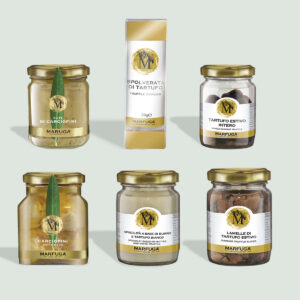
Beyond the staples, the Italian table depends on a category of preserved ingredients that most kitchens outside Italy overlook entirely. These are not condiments in the supermarket sense; they are concentrated expressions of landscape and season, used in small quantities to transform a dish. The Umbrian producer Marfuga, known primarily for its exceptional olive oils, also produces a range of preserved specialties that reflect the same philosophy: nothing unnecessary, everything at its best.
The Marfuga Whole Summer Truffle is a preserved black truffle of genuine quality; used shaved over pasta, eggs, or risotto, it delivers the earthy complexity that makes truffle cooking worth the effort. For an everyday expression of the same umami depth, the Marfuga Bruschetta Tomato Sauce is made with Umbrian tomatoes preserved in Marfuga’s own olive oil, a condiment that elevates the simplest bread or crostini into something worth sitting down for.
Two further preserves deserve a place in any serious Italian-inspired larder. The Marfuga Dried Tomatoes in Olive Oil, sun-dried and packed in EVOO, carry a sweetness and intensity that fresh tomatoes cannot approximate. The Marfuga Artichokes in Oil are prepared in the traditional Roman manner: trimmed, blanched, and preserved in olive oil with herbs. Both are ready to use as antipasto, as additions to pasta, or as the quiet centrepiece of a well-composed plate.
What unites these products is the same principle that governs the rest of the Italian pantry: restraint at the source means richness on the plate. You use less, and the result is more.
Plus 1. Wine as Part of the Italian Table
The Mediterranean diet has never been conceived without wine. The research on moderate red wine consumption, specifically its association with cardiovascular health and longevity in populations who drink it as part of a meal rather than in isolation, is among the most cited in nutritional epidemiology. The operative word is moderate: one glass with food, daily, as part of a broader dietary pattern. In the Veneto region of northeastern Italy, this practice has shaped one of the country’s most distinctive wine traditions.
Valpolicella is the wine of the Veneto hills, a red of medium body, bright acidity, and characteristic notes of cherry and dried herbs. At its most everyday expression, the Fidora Bio Valpolicella DOC is an organically farmed, food-friendly wine suited to the Italian approach of pairing wine with food rather than drinking it apart. The Fidora Valpolicella Ripasso DOC Classico Superiore takes the Ripasso method, refermentation over Amarone grape skins, to produce a wine of greater depth and structure, suited to a longer meal or a more considered occasion.
At the apex of the Valpolicella hierarchy stands Amarone della Valpolicella DOCG, made from late-harvested grapes dried for months before pressing, producing a wine of exceptional concentration, complexity, and longevity. The Fidora Organic Amarone della Valpolicella DOCG 2016 is a certified organic expression of this tradition, a wine that rewards patience, best opened with a significant dish or served at the end of a long, unhurried meal.
All three are produced by Fidora, a Veneto estate committed to organic viticulture. Together they offer a complete entry into the Valpolicella style, from the table wine that belongs at lunch to the Amarone that marks an occasion.
How to Bring This Into Your Life
The Italian approach to ingredient quality is about the daily, not the occasional. A few concrete ways to build the habit:
Put the olive oil on the table. Use it like a condiment, not just a cooking fat. A generous pour over warm bread, legumes, or grilled vegetables every day is where the health benefit accumulates. Use a Marfuga or Quattrociocchi EVOO for this purpose; their polyphenol counts justify the daily commitment.
Use the balsamic by the drop. A few drops of a real Giusti over a simple salad, over strawberries, over cheese at the end of a meal. It is a finishing ingredient with its own register. Even the everyday Bordolese changes a plate of Parmigiano into something that needs no further explanation.
Choose pasta for flavour, not shape. Dress a bronze-die pasta with olive oil, wild oregano, and Fior di Sale. If it is extraordinary with so little, the ingredients are right.
Keep a finishing salt in a bowl, not a shaker. Use it by hand, over everything that leaves the kitchen. It changes the act of eating, not just the flavour.
Stock the larder with preserved depth. A jar of Marfuga artichokes, a packet of dried tomatoes in oil, a small tin of truffle — these are the ingredients that make a simple meal extraordinary with no additional effort.
Drink one glass of wine with the meal, not after it. The distinction matters. Wine consumed with food, in the Italian manner, functions differently, metabolically and culturally, than wine consumed separately. A glass of Fidora Valpolicella with dinner is not indulgence. It is the Mediterranean diet in practice.
These ingredients assembled together make one of the most considered gifts a person with genuine taste could receive. The Italian luxury gift box brings this selection together in a format that communicates something more than price.
A Few Questions Worth Asking
Is premium olive oil worth it if I mostly cook with it rather than use it raw?
Yes. High-phenolic EVOO is more stable under heat than commonly assumed, performing well up to 180°C with lower oxidative degradation than seed oils. More importantly, using it for cooking means using it daily, which is precisely when the benefit compounds.
How do I know if a balsamic is genuinely aged?
Price is the clearest signal. Authentic Tradizionale DOP in its standardised 100ml bottle starts at around €40 for the 12-year minimum. The ingredient list contains only grape must and wine vinegar. Anything priced lower with the same claimed age warrants scrutiny.
What is the difference between the Giusti everyday range and the limited editions?
The Bordolese is for daily use, generous pours over salads, grilled vegetables, cheese. The limited editions (25-year, 100-year, Expos Hommage) are finishing ingredients used by the drop in high-attention moments, or given as gifts that communicate genuine connoisseurship. The Complete Collection makes the entire range available at once.
Can a curated pantry work as a gift?
It is one of the most appropriate gifts for someone who cooks or eats well. A selection of these ingredients tells a story about Mediterranean eating that no single product can. The Italian luxury gift box is designed with exactly this in mind.
How should I approach wine if I am interested in the health dimension?
The research consistently points to moderate, regular consumption with food as the pattern associated with benefit, not occasional heavy drinking. One glass of a polyphenol-rich red like Amarone or Ripasso with dinner, as part of a Mediterranean meal, is the model. The organic certification of the Fidora range also means lower sulphite levels, which many find easier to tolerate.
Sources & References
- Visioli F, et al. Olive oils high in phenolic compounds modulate oxidative/antioxidative status in men. ATBC Study. PubMed: 15642308
- European Food Safety Authority. Scientific Opinion on health claims related to polyphenols in olive oil. EFSA Journal, 2011. EFSA Journal 2011;9(4):2293
- Casal S, et al. Olive oil stability under deep-frying conditions. Food and Chemical Toxicology, 2010. PubMed: 19720246
- Slow Food Foundation. Trapani Sea Salt Presidium. fondazioneslowfood.com
- Ronksley PE, et al. Association of alcohol consumption with selected cardiovascular disease outcomes: a systematic review and meta-analysis. BMJ, 2011. PMC7920262
- Buettner D. The Blue Zones: Lessons for Living Longer from the People Who’ve Lived the Longest. National Geographic Society, 2008. bluezones.com/sardinia